
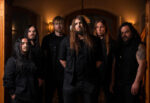







Here you go !
Vito F. Mainolfi (Pentesilea Road):
Thank you for the interview—it’s always a pleasure to talk about our music.
Pentesilea Road blends progressive rock with darker, atmospheric elements. How would you describe your sound today, especially on Sonnets from the Drowsiness?
Today, our sound is a deeper evolution into heavy-progressive territory—heavier riffs intertwined with atmospheric, almost dreamlike layers, and a stronger neo-prog. On Sonnets from the Drowsiness, it’s more immersive and cinematic than ever, blending heavy prog with introspective, ethereal passages that evoke a sense of wandering through invisible landscapes.
The album title Sonnets from the Drowsiness suggests a poetic and introspective concept. What inspired this title, and how does it reflect the album’s overall theme?
“Drowsiness” captures that hazy, half-awake state between dream and reality—a lucid dreaming vibe where awareness flickers amid illusion. The album is a loose concept journey through imagined cities and existential themes: introspection, displacement in the modern world, the tension between inner reflection and outer chaos. The “sonnets” evoke poetic fragments emerging from this drowsy haze.
This record feels very cinematic and immersive. Was storytelling or visual imagery part of your creative process while composing the songs?
Absolutely—visual imagery is central to how I compose. I often start with mental pictures: desolate urban sprawls, Mediterranean seas under stormy skies, abandoned shrines, or abstract voids. The songs are like scenes in a film without visuals, building narratives through dynamics, moods, and recurring motifs. Calvino’s descriptive, surreal cities fueled a lot of that storytelling approach.
Compared to your earlier releases, this album appears more expansive and complex. How do you feel the band has evolved musically since your debut?
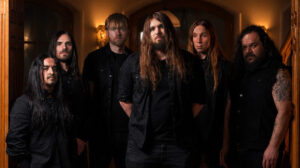
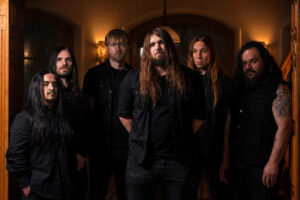
Since the 2021 debut, we’ve solidified as a full band rather than a solo project with guests. The lineup—Michele on vocals, Giovanni on bass, Ezio on keys, Alfonso on drums—allowed for true collaboration in arranging. The result is more expansive structures, richer layers, and greater emotional depth. We’ve leaned heavier into progressive complexity while keeping melodies accessible, and the production is more polished, letting every instrument breathe.
The album was released as a double record. What led you to choose this format, and how did it shape the way the songs were written and arranged?
We had so much material—18 tracks clocking in at over 100 minutes—that a single album felt restrictive. The double format let us explore the concept fully without cutting corners, dividing it into two “acts” that flow like sides of a vinyl journey. It influenced arrangement by encouraging longer developments, interconnected themes, and breathing room between intense and atmospheric pieces.
Can you tell us about the songwriting and production process? Who took the lead, and how collaborative was the work within the band?
I handle most initial songwriting—music and lyrics—as the project’s founder. But this time, it was far more collaborative: the band fleshed out arrangements together, adding their signatures (like Ezio’s keyboard textures or Alfonso’s dynamic drumming). Production was self-managed with input from everyone, plus guest contributions polished certain tracks.
Zak Stevens appears on the bonus track “The Geometry of Nothing.” How did this collaboration come about, and what did he bring to the song?
Zak’s version is exclusive to the physical double Digipak— a powerhouse take with his signature Savatage intensity. It came about through mutual connections in the prog/metal scene; we reached out, and he loved the track’s themes of existential voids and lucid awareness. His vocals add raw power and drama, contrasting Michele’s version beautifully and elevating it to epic heights.
Several tracks explore shifting moods between tension, melancholy, and intensity. How important is emotional contrast in your music?
It’s fundamental. Prog thrives on dynamics—without contrasts, it becomes monotonous. We deliberately shift from tense heaviness to melancholic calm to explosive intensity, mirroring life’s emotional ebb and flow, or the dream state’s unpredictability. It keeps the listener engaged on that immersive journey.
Progressive rock often balances technical skill with emotional expression. How do you approach this balance as a band?
We prioritize emotion first—technique serves the feeling, not the other way around. Riffs and solos are technical when they enhance mood or narrative, but we avoid virtuosity for its own sake. Melody and atmosphere carry the emotional weight, with skill providing the foundation.
Looking ahead, how do you see Sonnets from the Drowsiness fitting into the broader journey of Pentesilea Road, and what can listeners expect next from you?
This album marks our maturation: a bolder statement of our post-progressive identity, deepening the Calvino-inspired dissidence against modern alienation. It bridges our debut’s heavier roots to more expansive, cinematic horizons.
Next?
More music, the 3rd album demo is ready —perhaps exploring new thematic roads, live shows if possible, and continuing this tale of protest and introspection. Stay tuned; the journey along the invisible cities continues.
Thanks again for the thoughtful questions!
OFFICIAL LINKS








Add Comment